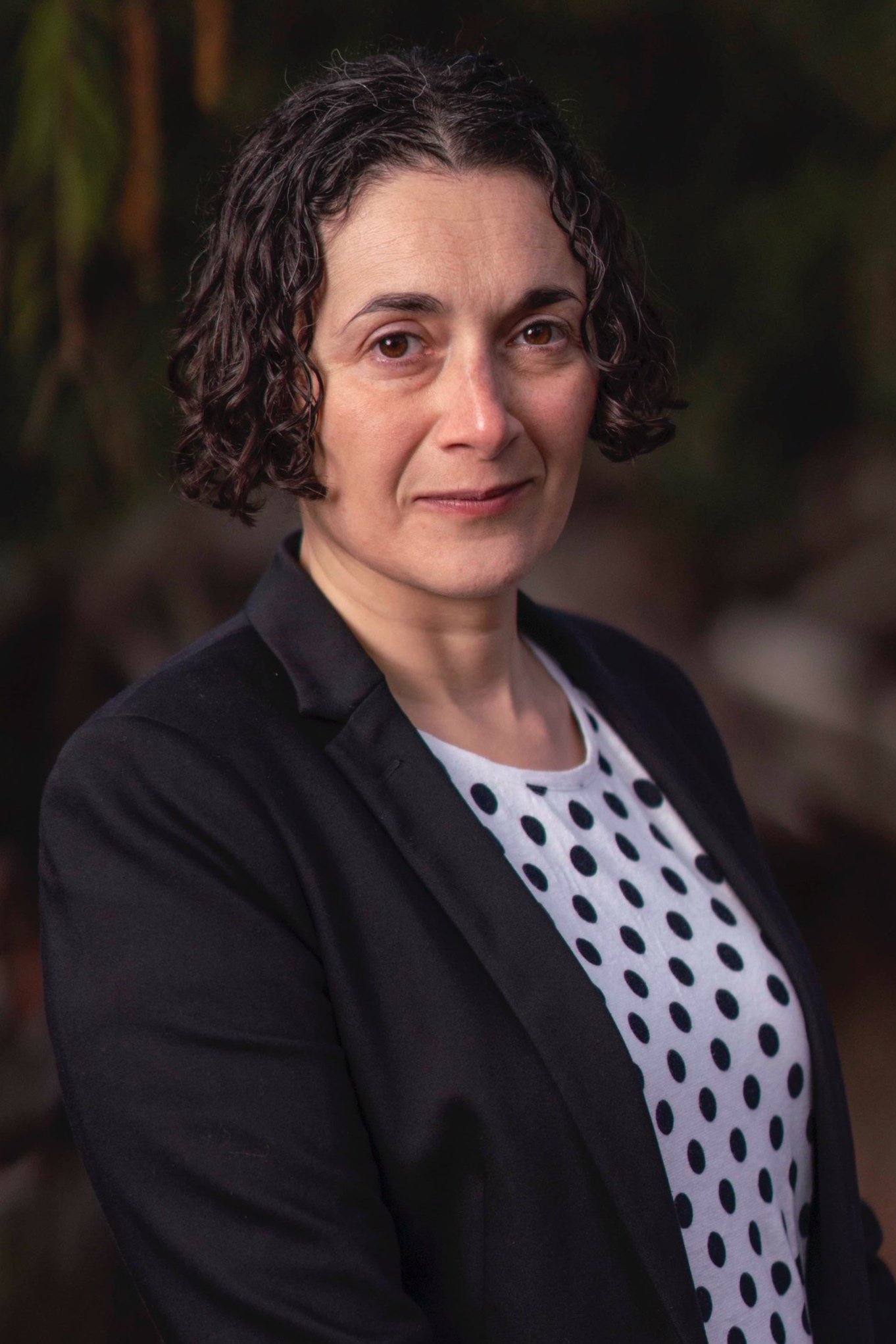
Dr Joëlle Gergis is an award-winning climate scientist and writer. She is an internationally recognised expert in Australian and Southern Hemisphere climate variability and change who has authored over 130 scientific publications. Joëlle served an Australian lead author on the United Nations’ Intergovernmental Panel on the Climate Change’s Sixth Assessment Report — the global authority on climate change science.
Joëlle is currently an honorary Associate Professor of Climate Science at the University of Melbourne.
Her book, Humanity’s Moment: A Climate Scientist’s Case for Hope, was shortlisted for a 2023 Australian Book Industry Award (ABIA) and the 2023 Queensland Non-Fiction Book Award, and won the 2023 Scholarly Book of the Year. It was also shortlisted for the Penn Libraries 2024 Book Prize in Sustainability in the USA.
Joëlle’s next book will be released in 2027.
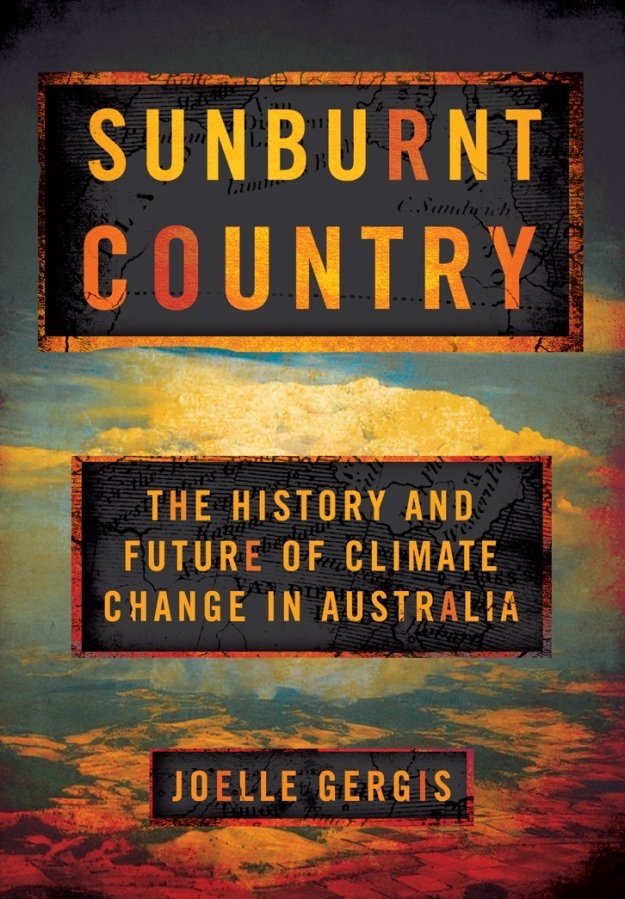
Sunburnt Country (MUP, 2018)

Humanity's Moment (Black Inc, 2022)
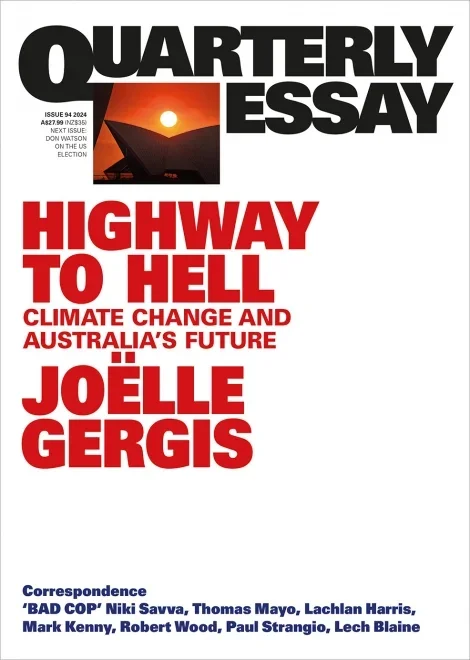
Highway to Hell (Black Inc, 2024)
What People Are Saying:
“I am in awe of Joëlle’s courage and clarity. This book is a gift to the world.”
— Jess Hill, author of See What You Made Me Do
“Lucid, heartfelt, devastatingly clear-eyed but also inspiring in its passionate plea for change, Humanity’s Moment is necessary reading.”
— James Bradley, author of Ghost Species
“In Humanity’s Moment, Joëlle Gergis, a leading climate scientist and gifted author, manages to unpack the science behind the climate crisis in a way that is authoritative, gripping, and very personal.”
— Professor Michael E. Mann, Penn State University, author of The New Climate War
“The pages are stained with the author’s tears, hopes, heart and soul.”
— Professor David Karoly, University of Melbourne
“I've been waiting for an IPCC scientist to write this book. Where does someone charged with delivering the globe the stark existential truths find their hope; how do they navigate a path forward? How wonderful that Joëlle, a nature lover with a poet's sensibility, has been the one to do it.”
— Sarah Wilson, author of This One Wild and Precious Life
“[Joëlle] lays out our planetary situation in stark and simple terms, in sentences and statistics that demand underlining, even if they seem too terrible to bear. This all makes for raw and urgent reading, but, in the vein of Julia Baird’s Phosphorescence, the book also offers hope: its final section conjures the ‘social tipping point’ needed to compel political action, reminding us of the roles we can each play.”
— Kim Thomson, Books+Publishing
“‘This book by a leading scientist is powerful, urgent, passionate, and clear explanation of the science of climate change and the kind of changes with which we need to meet it, changes in our energy policy, politics, and very imagining of the natural world and humanity’s place in it. With its stubborn and well-grounded hopefulness, Humanity’s Moment is a tool for engagement, whether you’re new to the issue or could use some bolstering in your commitment.’.”
— Rebecca Solnit, author of Orwell’s Roses and Hope in the Dark
“Scientists aren’t cyborgs – studying the climate crisis comes with a deep emotional burden. Joëlle Gergis has shouldered that burden and as a result has some useful ideas to share with the rest of us as we try to cope with the reality of what we’ve already done. It’s a key part of trying to limit the damage – physical and spiritual – going forward.”
— Bill McKibben, author of The End of Nature
“And of all the climate-related books I found this year, one stood above the rest. Joelle Gergis’ Humanity’s Moment is clear-eyed, wounded, humane and above all, honest. Not many books feel necessary, but here’s one that qualifies.”
— Tim Winton, author of Cloudstreet and Breath
“I commend Dr Gergis for her bravery in sharing her personal journey with those of us who are not so embedded in the field. This a book that should be read by all, old and young, great and small in the political process; it will enlighten and inspire. Thank you, Dr Gergis.”
— Iain Gordon, Fellow of the Royal Society of Biology
“As an act of defiance, it is heroic.”
— Kurt Johnson, Sydney Morning Herald
“If there is only one nonfiction book you read this year, it really should be this one.”
— Alison Huber, Readings
“This is a rare achievement. Gergis draws on a vast body of scientific evidence to craft a book that is not only intellectually persuasive, but emotionally and personally compelling as well. This book belongs in the first rank of literature on the environment worldwide. Essential reading for anyone concerned about our future.”
— Queensland Literary Awards